Our namesake – Bolyai Farkas
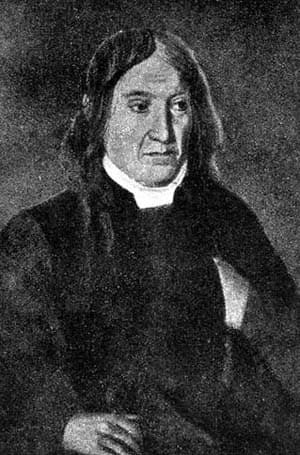
Bolyai Farkas
9 February 1775 – 20 November 1856
Bolya – Târgu Mureș
“Truth must be sought, and whoever seeks it will find it.”
Mathematician, physicist, playwright
Târgu Mureș, 1804–1856
Carl Friedrich Gauss
Bolyai János (1802–1860)
Tentamen (1832)
8 languages: Hungarian, Latin, Romanian, German, French, English, Italian, Hebrew
The school's namesake
Mathematician · Physicist · Playwright · Poet · Inventor · Teacher
Family and childhood
He was born on 9 February 1775 in Bolya, near Sibiu (Nagyszeben). His father, Bolyai Gáspár (1732–1804), came from an impoverished noble family. His mother, Pávai Vajna Krisztina, brought a modest dowry into the family. He also had a younger brother, Antal (1779–1845).
Until the age of six he was taught at home by his father, who recognised his son's extraordinary talent. Even then the little boy showed an outstanding gift for mental arithmetic – he is said to have worked out the square and cube roots of 14-digit numbers in his head.
His studies
In 1781, at the age of six, he enrolled at the famous College of Nagyenyed (Aiud), where his teachers quickly recognised his outstanding talent. He spoke Latin and Romanian fluently and proved to be an extraordinary mental calculator. Later he also learnt Greek, Hebrew, French, Italian, English and German – in all, he spoke eight languages.
Besides mathematics, he also showed outstanding talent in drawing and music. He was considered a child prodigy, especially because of his rapid progress in arithmetic and languages.
Gauss and the university years
In 1796 he went to the University of Jena and then moved on to Göttingen, where he met Carl Friedrich Gauss – the greatest mathematician of the age. Their friendship is one of the most remarkable relationships in the history of mathematics.
Their correspondence lasted for decades and is one of the most important documents in the history of mathematics. Gauss's letters were full of metaphors, similes, rhetorical questions and exclamations.
His marriage and his son, János
On 28 September 1801 he married Árkosi Benkő Zsuzsanna, the daughter of a surgeon and teacher in Cluj (Kolozsvár). At the end of 1802 their son, Bolyai János, was born; he later became world-famous as one of the creators of non-Euclidean geometry.
Farkas directed his son's mathematical education himself – he chose his teachers, and when they had nothing new left to teach the boy, he continued the teaching himself.
The Târgu Mureș years – 47 years of teaching
On 22 January 1804 he took up the chair of mathematics, physics and chemistry at the Reformed College of Târgu Mureș. He taught there until he retired in 1851 – for nearly half a century. He was a pioneer in teaching mathematics as a science in its own right, rather than as part of philosophy.
Although his salary was modest, he took on extra work: he wrote and published plays, ran the college tavern, and designed tiled stoves and stove parts. His teaching creed was that students must be taught to think, not merely made to learn formulas by rote.
A true polymath
Mental calculator
8 languages
Hungarian, Latin, Romanian, German, French, English, Italian, Hebrew
Musician
Draughtsman
Playwright
Poet
Inventor
Aphorist
Birth
College of Nagyenyed
Jena and Göttingen
Marriage
Birth of Bolyai János
Appointed teacher
Five tragedies published
Az arithmetika eleje
Tentamen published
His last works
Jelentés – a farewell letter
Death
His work in mathematics
Tentamen
1832 · Main work
Az arithmetika eleje
1830 · Arithmetic
Summarising work
1854 · Last great work
Stove invention
A practical scientist
His literary work
His plays
Five of his tragedies were published in Sibiu in 1817:
- Pausanias, or the Victim of Ambition
- Mohamed, or the Triumph of Glory over Love
- Kemény Simon, or the Victim of Patriotism
- The Triumph of Virtue over Love
- The Triumph of Love over Virtue
He also wrote a comedy — A párizsi per (The Paris Lawsuit) —, which contains a Shakespeare-like line about the dilemma of marriage.
His poems
His poems were published under the title Szívhangok (Voices of the Heart); he wrote them in three languages: Latin, German and Hungarian.
He was particularly fond of elegies — moving poems in a short, concise form, written on the deaths of his friends and family members.
In 1855–56 he also wrote his own farewell letter and will, under the title "Jelentés" (Report), which is at once a personal confession and a literary work.
~1700 Aphorisms
Bolyai Farkas left behind some 1,700 aphorisms and sayings on the great questions of life:
His aphorisms reflect the polymath's wisdom, humour and deep understanding of people. Many regard him as one of the forerunners of Hungarian aphoristic literature.
Quotations from Bolyai Farkas
“Truth must be sought, and whoever seeks it will find it.”
Aphorism
“To marry or not to marry? — that is the question.”
From his comedy A párizsi per (The Paris Lawsuit)
“Science is the only treasure that we keep even when we share it.”
An aphorism about knowledge
“Friendship is more important even than mathematics, for the most beautiful equation of the human soul is the one written by two understanding hearts.”
From his correspondence
Father and son — in the service of science
The relationship between Bolyai Farkas and his son, Bolyai János, is one of the most remarkable father–son relationships in the history of science. Farkas directed his son's mathematical education himself, chose his teachers, and when they had nothing new left to show him, he continued the teaching himself.
Guided by his father, János set out to study the fundamental questions of geometry and in the end created non-Euclidean geometry — which fundamentally changed humanity's understanding of space.
Farkas was his son's only true understander and supporter at a time when the world did not yet grasp the significance of János's discoveries. Their mutual respect and love for each other is the most beautiful human story in mathematics and science.
Bolyai Farkas
1775–1856
Bolyai János
1802–1860
The most important father-and-son pair in the history of mathematics. The father studied the foundations of geometry — the son solved the problem.
Why does our school bear his name?
The high school in Târgu Mureș took the name of Bolyai Farkas in 1956, honouring the memory of the great mathematician and teacher. But the choice of name goes far beyond remembrance.
Bolyai Farkas embodies everything our school stands for: a passion for knowledge, versatility, the courage to innovate and commitment to the community. He was a polymath in the noblest sense of the word — a mathematician who also wrote plays; a teacher who also built stoves; a scholar who also thought in aphorisms.
During his half-century as a teacher, generations grew up under his guidance, among them his own son, who became one of the most famous mathematicians in the world. Bolyai Farkas's intellectual legacy still pervades the life of the school today: the values of knowledge, perseverance, high standards and an open mind are the cornerstones of the school.
“Knowledge is the only treasure that we keep even when we share it.”
The spirit of Bolyai Farkas lives on within the walls of the Bolyai today.
Discover the school's history
Discover the centuries-old past, traditions and values of the Bolyai Farkas Theoretical High School.